The Mental Load Isn't a To-Do List Problem
You don't need another app that lets you write things down.
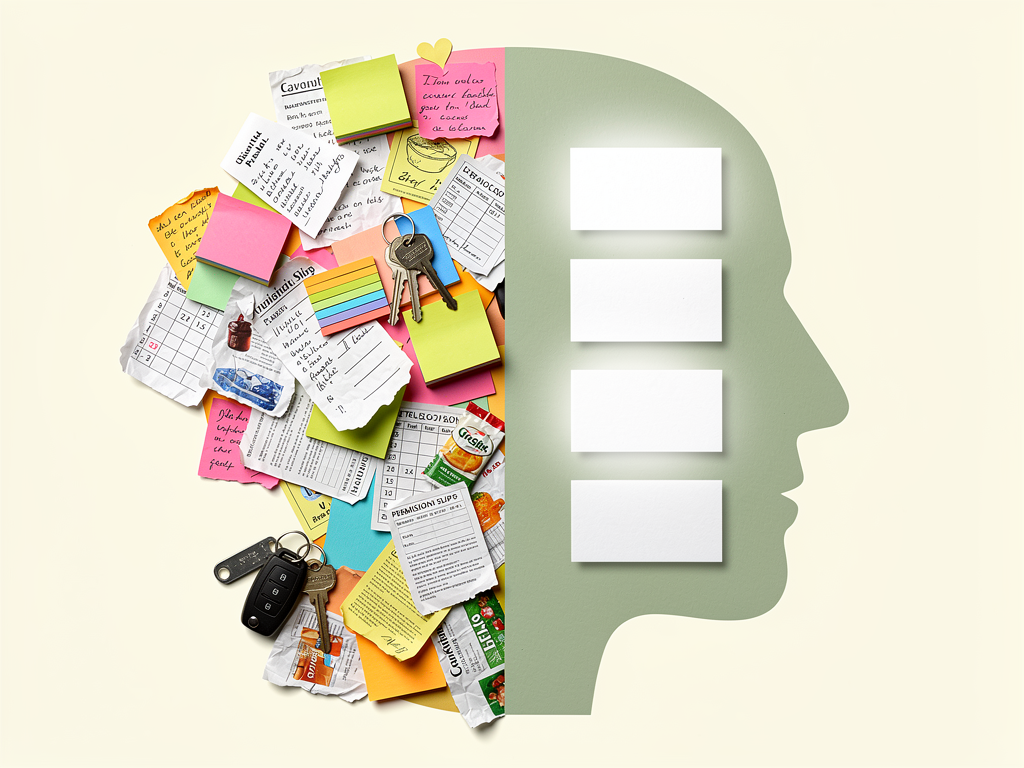
You need something that carries the knowing — the 47 things bouncing around your head at 3 AM that nobody else in the house is thinking about. The dentist appointment you scheduled three months ago. The soccer cleats that won't fit by spring. The RSVP that's due Friday for a party you haven't bought a gift for yet. The fact that picture day is tomorrow and the good shirt is in the laundry.
This isn't forgetfulness. This is cognitive labor. And research is finally giving it a name.
The Four Stages Nobody Talks About
In 2017, sociologist Allison Daminger published research that broke cognitive labor into four distinct stages:
- Anticipate — Noticing that something needs attention before it becomes urgent
- Identify — Figuring out what the options are and what information is needed
- Decide — Choosing a course of action
- Monitor — Following up to make sure it actually happened
Here's the problem: every productivity app, shared calendar, and family organizer on the market helps with stage 3. Make a decision, write it down, check it off.
Nobody carries stages 1, 2, and 4.
And those are the stages that wake you up at 3 AM.
The Numbers Are Staggering
A 2024 study from the University of Bath and University of Melbourne found that 71% of cognitive household labor falls on mothers. Not physical tasks — the anticipating, monitoring, and remembering that tasks even need to happen.
Skylight and Harris Poll put a dollar figure on it: $3.8 trillion in unpaid cognitive labor annually in the United States alone. That's larger than the GDP of Germany.
This isn't a niche problem. It's a structural gap that affects virtually every household with children. The reason it's invisible is that the people who carry it look like they're not doing anything. They're "just" remembering. They're "just" keeping track. They're "just" making sure nothing falls through the cracks.
Until something does. And then everyone asks, "Why didn't someone remember?"
Someone did remember. One person. Every time. That's the problem.

Why Your To-Do App Can't Fix This
Here's a quick test: open whatever productivity tool your family uses. It might be Apple Reminders, Cozi, Google Calendar, Todoist, or a shared note.
Now ask yourself: Who put the items on that list?
The answer is almost always the same person. The tool didn't anticipate that the furnace filter needs changing. It didn't identify that Liam's shoes won't fit by soccer season. It didn't monitor whether the dentist appointment actually happened.
The default parent did all of that cognitive work, then typed it into an app, then followed up to make sure it got done. The app was a glorified notepad. The human did the carrying.
Shared calendars are worse. They create the illusion of shared responsibility while actually adding a fifth task: coordinating the calendar itself. Now the default parent is doing stages 1 through 4 and making sure the other person checks the calendar.
What 79% of Parents Are Already Trying
Here's something interesting: 79% of parents have already tried using AI to help manage family life (Skylight/Harris, 2024). They're asking ChatGPT about meal plans, using Siri to set reminders, Googling "how often should I change my furnace filter."
They're reaching for the right idea with the wrong tool.
General-purpose AI doesn't know your household. It doesn't remember that your daughter is allergic to peanuts, that your car insurance renews in March, that your partner handles soccer logistics but you handle doctor appointments. Every conversation starts from zero. You carry the context, then hand it over, then carry it again next time.
The tool that actually solves mental load needs three things no current product offers:
- Persistent memory — It knows your household and builds knowledge over time
- Anticipation — It surfaces things before they become urgent, covering Daminger's stage 1
- Monitoring — It follows up without being asked, covering Daminger's stage 4
Seven Domains, Not Seven Apps
Mental load doesn't live in one category. A single morning might involve health (pediatrician follow-up), school (permission slip due), home (the dryer is making a noise), meals (nothing's thawed for dinner), finances (insurance renewal this week), social (RSVP for Saturday), and admin (car registration expires next month).
Most tools force you to manage each domain separately — a calendar for appointments, a list for groceries, an app for home maintenance, a note for school stuff. That's seven cognitive contexts to maintain, seven places to check, seven opportunities for something to slip.
The mental load isn't seven problems. It's one problem across seven domains. The solution should match.
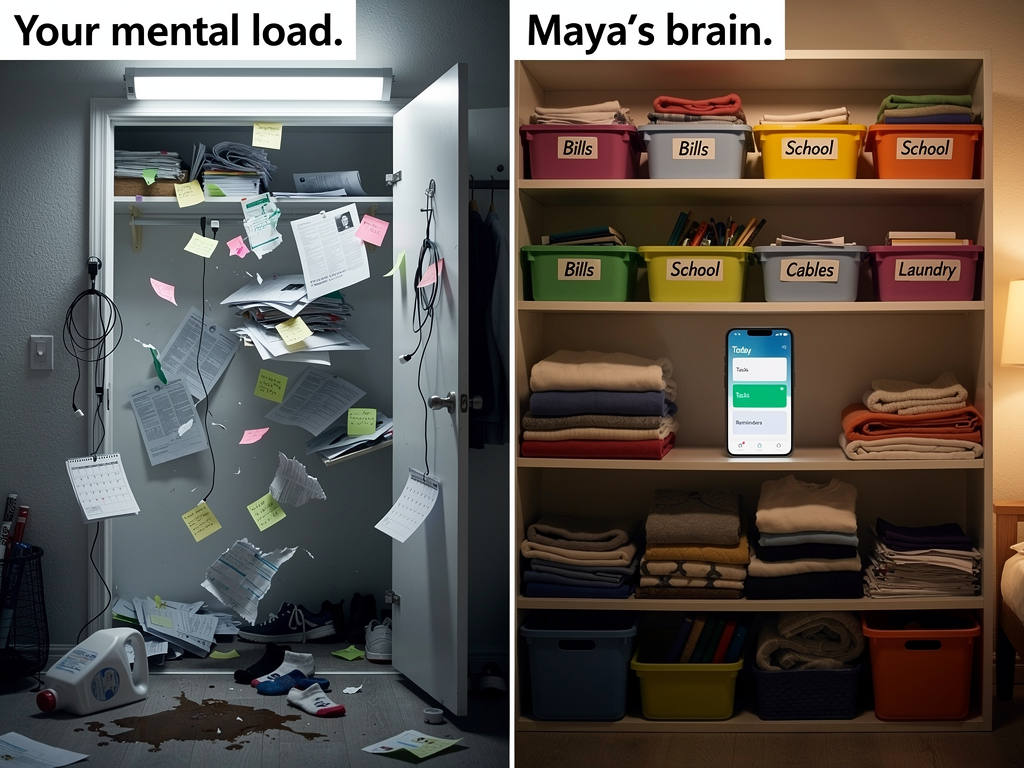
What Carrying Actually Looks Like
If you're the person who carries the mental load, you already know what this feels like. But in case someone sent you this article to help explain it, here's a Tuesday:
6:15 AM — Wake up already thinking about the day. Liam has soccer but his cleats are too small. Need to order new ones. When's the next game? Saturday. Can they arrive by then? Check Prime delivery. Also: picture day is Thursday, not tomorrow. Wait — is it Thursday? Check the school app.
7:30 AM — Breakfast. Remember the pediatrician said to schedule a follow-up. When did she say? Six weeks? That's this week. Need to call before 4 PM. Also: the gutter cleaning guy never called back. It's been two weeks. If it rains this weekend that's a problem.
12:00 PM — At work. Text from partner: "What's for dinner?" Nothing's thawed. Mentally run through the freezer. Chicken takes too long. Can we do pasta? Do we have pasta? We're out of garlic. Add to mental grocery list. Also: partner forgot to mention — PTA meeting tonight. Childcare?
3:00 PM — School pickup. Liam's teacher says he needs a white shirt for the concert next week. When's the concert? It's not on the calendar. Was there a flyer? Check backpack later. Also: cleats aren't ordered yet.
9:30 PM — Kids in bed. Finally order the cleats. Add pediatrician to tomorrow's call list. Google gutter cleaning companies as backup. Check the school calendar — concert is next Thursday, same day as the dentist. One of them has to move. Set a reminder to call the dentist tomorrow too.
2:47 AM — Wide awake. Did you RSVP to Sophia's birthday party? When is it? Is it the same weekend as the in-laws visiting? Do you need to buy a gift? What does Sophia like? Ask Sophia's mom. But not at 2:47 AM.
None of that showed up on a to-do list. All of it happened in one person's head.
This Is What Maya Is For
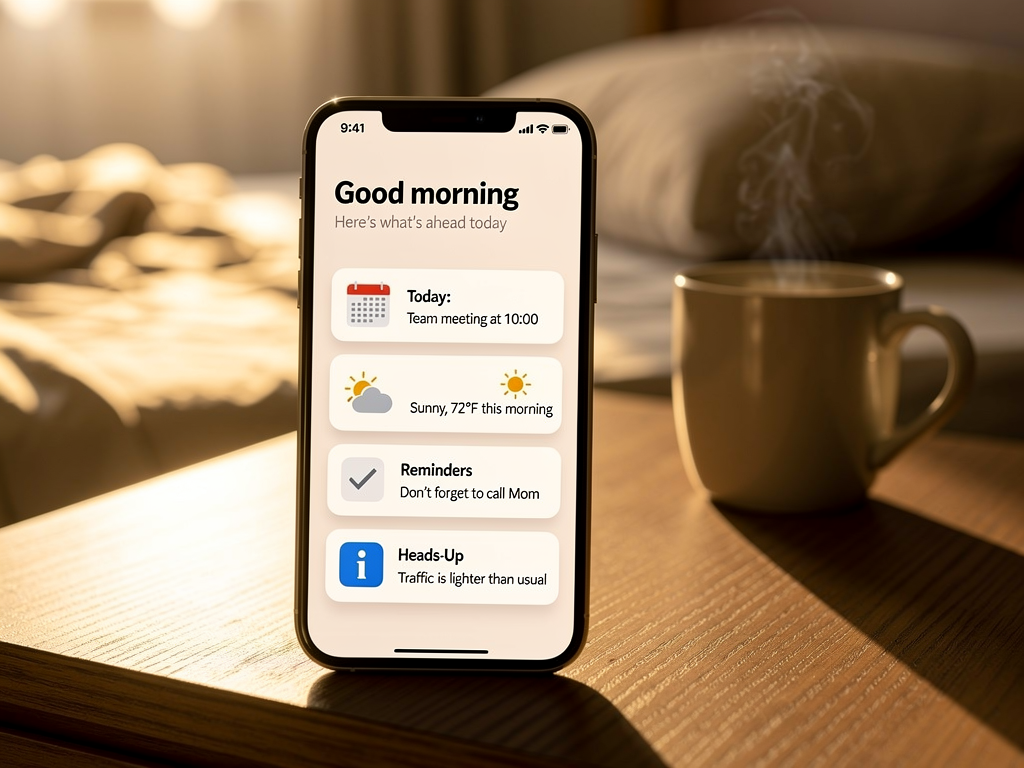
Maya is a voice-first AI built specifically to carry the mental load. Not manage tasks — carry the knowing.
You talk to her. In the car after drop-off. While cooking dinner. At 2:47 AM when you can't stop thinking about whether you RSVP'd.
She remembers everything. She organizes it across all seven life domains — home, health, school, meals, finances, social, admin. She learns your household over time, building a knowledge graph of your family's facts, patterns, routines, and preferences.
By month one, she knows your kids' names and the big dates. By month three, she knows your routines. By month six, she's anticipating what's coming before you think of it.
She covers all four Daminger stages:
- Anticipate: "Picture day is Thursday. The white shirt is in the laundry — you might want to run a load tonight."
- Identify: "Liam's cleats are a size 3. He was a 2 in September. Based on growth rate, order a 4."
- Decide: "The dentist and the concert are the same day. Moving the dentist to Friday morning works — you're free until 11."
- Monitor: "You asked me to follow up on the gutter company. It's been two weeks. Want me to remind you to call the backup?"
Not a to-do list. Not a calendar. Not another app that makes you do the work of organizing your own overwhelm.
A second brain that carries what you can't put down.
Join the Founding Households
We're opening Maya to the first 100 households — the Founding Households. You'll get early access, founding pricing that locks in permanently, and a real voice in shaping what Maya becomes.
If you've ever thought "I just need someone to carry some of this" — that's exactly what she does.